
Howard County Arrest Records and Charges
Howard County arrest records begin on the law-enforcement and booking side. The Sheriff's Office is a court and judicial enforcement agency, while the Howard County Department of Corrections operates the Detention Center, Central Booking Facility, and Community Service Program. Booking arrestees shifted to Corrections when the Central Booking Facility opened in March 2005. Official research did not locate a public Howard County online jail roster, so custody details often require Corrections, VINE, DPSCS, or a records request rather than a county mugshot search.
Court charges after arrest begin when a charging document is filed. The charge record focuses on the alleged offense, charge code or statute, filing court, bond or release entries, and current status. The full case file includes more, such as motions, pleas, hearings, verdicts, disposition, and sentence. Those broader outcomes are covered through Howard County criminal court records.
Maryland's county prosecutor is called the State's Attorney. In Howard County, the State's Attorney makes filing decisions, may amend or dismiss charges, and may enter nolle prosequi when the office chooses not to pursue a charge. A single arrest can produce several charges, and each charge can end differently.
Search Howard County Arrest Records
There is no official county public arrest roster located in the research. For court charge records, use Maryland Judiciary Case Search to look for public District Court and Circuit Court case summaries. For custody status, Howard County Corrections can be contacted by phone, Maryland VINE can provide custody status and notifications, and the Maryland DPSCS locator covers people committed to the custody of the Commissioner of Correction.
- Start with the person's full legal name and date of birth if available.
- Search Case Search for the defendant name or case number to find filed charges and case status.
- Confirm whether the case is in District Court or Circuit Court because charge path and hearing stages can differ.
- Read each charge separately, including charge text, statute, status, disposition, and any amended or dismissed count.
- For current custody, call Howard County Corrections or use VINE rather than assuming Case Search is a jail roster.
- For police, sheriff, or body-worn camera material, use the appropriate Maryland Public Information Act request channel.
Howard County Police records contacts may handle police report questions outside the court file. The research lists the Police records-section email as therecordssection@howardcountymd.gov and general phone 410-313-3200. These agency records are different from the court charge record.
Howard County Charging Documents
A charging document is the paper that states the alleged criminal offense. It may come from a complaint, a prosecutor-filed information, or a grand-jury indictment. In Maryland practice, District Court may handle misdemeanor and preliminary felony stages, while serious criminal matters and indictments move through Circuit Court. The charging document is the bridge between the arrest event and the court case.
| Point | Complaint | Information | Indictment |
|---|---|---|---|
| Filed by | Police officer, commissioner process, or prosecutor depending on case path. | State's Attorney. | Grand jury. |
| Common use | Misdemeanors, initial charges, and lower-court criminal events. | Prosecutor-filed criminal charges. | Serious criminal matters and felony trial path. |
| Where it appears | District Court or later Circuit Court record if transferred. | District Court or Circuit Court depending on charge and filing. | Circuit Court criminal record. |
| What to check | Offense date, charge text, statute, bond, and initial hearing status. | Amended or selected charge counts and prosecutor filing date. | Count list, felony charge language, and arraignment events. |
Maryland Criminal Procedure Section 10-105 is the expungement statute that can affect court charges after arrest.
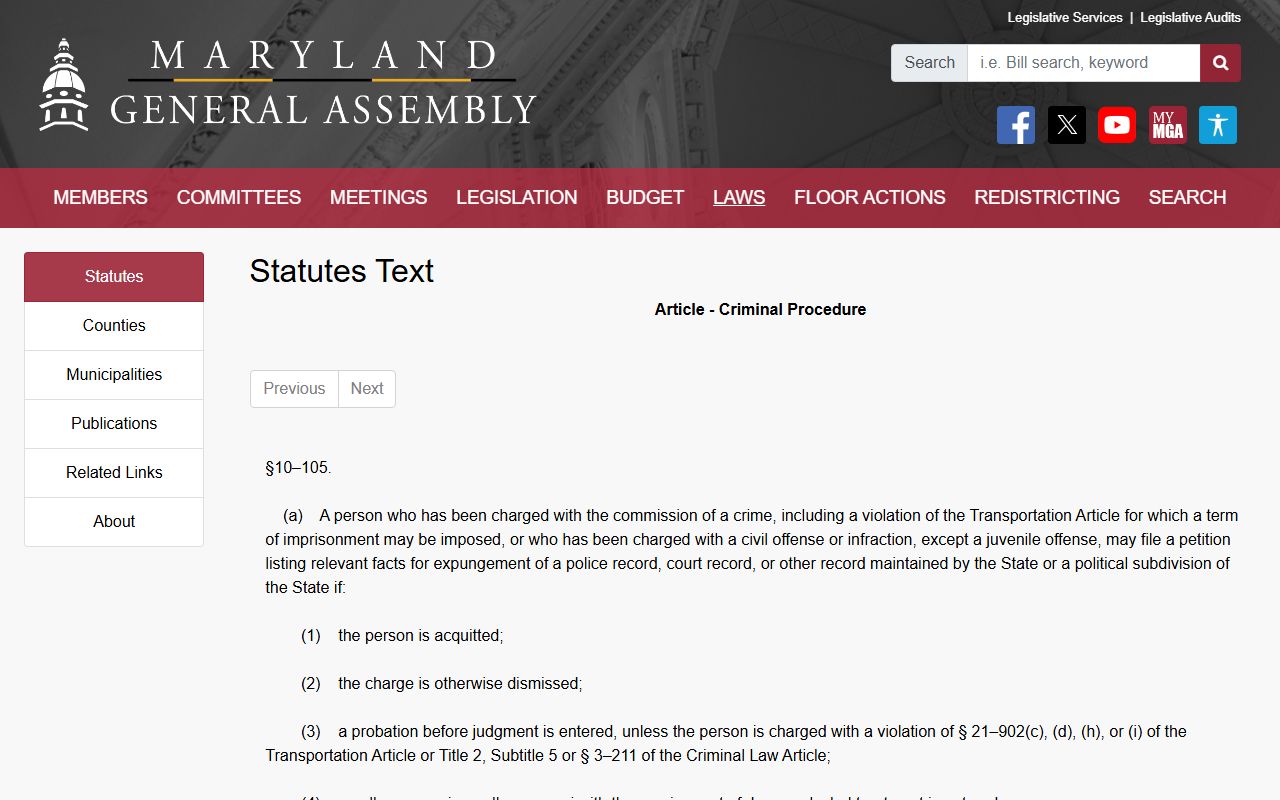
District Court jurisdiction matters because many arrest-to-charge records begin in that court before any Circuit Court case exists.
Howard County Charge Status
Charge status can change as a case moves. A charge may be pending at the start, amended after review, reduced during plea negotiations, dismissed by the court, not pursued by the State's Attorney, or resolved by plea or trial. Read the docket chronologically and compare the charge list with the disposition list. One arrest can create multiple counts, and one case can contain a mix of guilty, not guilty, dismissed, stet, and nolle prosequi outcomes.
| Status | What It Means | Why It Matters |
|---|---|---|
| Pending | The charge has been filed and has not reached final disposition. | Upcoming hearings, bond, motions, or plea talks may still be active. |
| Amended | The charge text, count, statute, or severity has been changed. | The final filed charge may differ from the first arrest allegation. |
| Reduced | The charge is changed to a lower offense or less severe count. | Often tied to plea negotiation or prosecutor review. |
| Dismissed | The court has dismissed the charge. | It is not a conviction, though the public record may still show the dismissed charge unless restricted or expunged. |
| Nolle prosequi | The State's Attorney has chosen not to pursue the charge. | It may support expungement eligibility, but eligibility depends on Maryland law and timing. |
| Stet | The charge is placed on an inactive docket under Maryland practice. | The case is not the same as a conviction, but it may be reopened under rules. |
Charge vs Conviction
A court charge record is not proof of guilt. It records what was filed after an arrest and what happened to each count. A conviction requires a guilty plea or a finding of guilt. Howard County arrest records may explain why a person entered custody, but the court charge record is where the filed offense and outcome are tracked.
| Point | Charge | Conviction |
|---|---|---|
| Meaning | An accusation filed in court after arrest or by prosecutor action. | A guilty plea or court finding of guilt. |
| Timing | Appears near the start of the case and may change. | Appears at or near final disposition for a count. |
| Possible result | Pending, amended, reduced, dismissed, stet, or nolle prosequi. | Sentence, probation, fine, restitution, or other court-ordered outcome. |
| Search caution | Do not treat a filed charge as a final court outcome. | Check appeals, post-conviction entries, expungement, or later modification. |
Howard County Court Charge Fields
Maryland Case Search can show charge details in criminal and traffic cases where public access allows it. The public result can include case number, name, court, date of birth where public, party type, trial date, charge, and case disposition. It can also show docket entries such as warrant issued, warrant recalled, motion filed, hearing scheduled, plea, sentence, or appeal events.
| Field | What It Shows |
|---|---|
| Case number | The court file identifier for the charge record. |
| Defendant name | The person charged, using public identifiers allowed by court rules. |
| Court | District Court, Circuit Court, or another court tied to the charge. |
| Charge | The alleged offense, statute, and count information where public. |
| Trial or hearing date | The scheduled court event linked to the charge. |
| Disposition | The outcome for the charge, including dismissal, guilty, not guilty, stet, or nolle prosequi. |
| Bond or warrant entry | Public docket entries tied to release, bench warrant, recall, or failure to appear. |
Arrest Custody and Bond
Custody after arrest is a Corrections function in Howard County. The Department of Corrections operates the Howard County Detention Center at 7301 Waterloo Road in Jessup and the Central Booking Facility. For family emergencies or jail contact, the research lists Corrections at 410-313-5200. For bond hearing results, the visitor page says to call 410-313-5233 after 2 PM on the day of the hearing. For how bond can be posted, contact the District Court Commissioner at 410-313-4740, 24 hours.
Bond and release information can appear in court records, but it is not the same as a jail roster. A person released from custody may still have pending charges. A person with no public custody listing may still have an active case. Use the court charge record for filed offenses and the custody channels for jail status.
Note: Howard County official sources did not identify a public county jail roster or app-only arrest search.
Sealed and Expunged Charges
Maryland law restricts several types of arrest and charge records. Juvenile court records are confidential except as allowed by law or court order. Expunged, shielded, or sealed records are not available through ordinary public lookup. The Howard Clerk's case-record guidance also warns that juvenile and adoption records may be restricted, and Maryland filing rules restrict personal identifiers.
| Point | Sealed or Shielded | Expunged |
|---|---|---|
| Public access | Inspection is limited by rule or court order. | Eligible police and court records are removed from public access. |
| Best source | The court custodian can explain whether access authority is required. | Maryland Judiciary forms and the court that handled the case control the filing path. |
| Common trigger | Court order, shielding rule, restricted category, or confidential matter. | Eligible dismissal, acquittal, not guilty, nolle prosequi, certain stet or probation-before-judgment cases, or statutory automatic expungement. |
| Limit | Does not always erase an agency record. | Eligibility and waiting periods matter, and the State's Attorney may object. |
Maryland Criminal Procedure Section 10-105.1 covers automatic expungement for certain qualifying records.
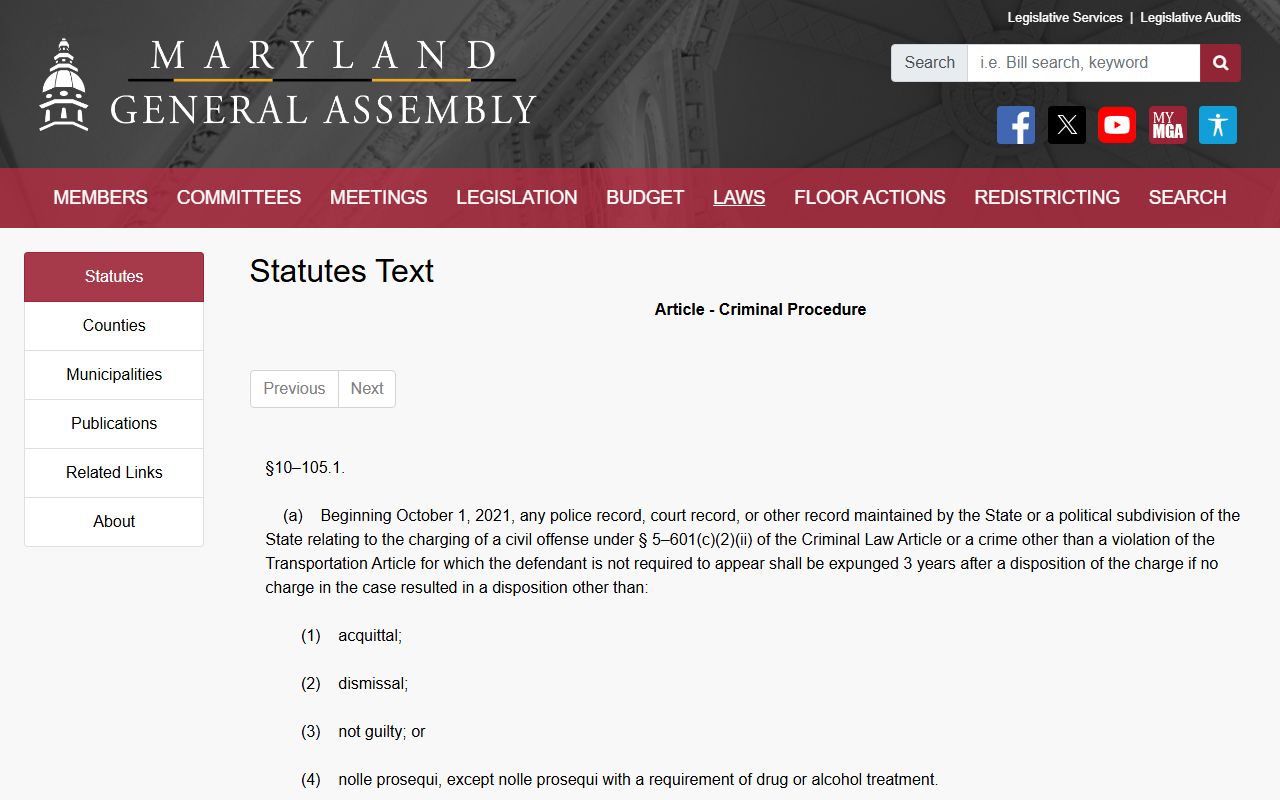
Automatic expungement is important because some charge records can leave ordinary public view without a separate public database showing each agency step.
Access Rules for Howard Charges
Public charge access is mainly governed by Maryland court-record rules. Maryland Rules Title 16, Chapter 900 controls public access to judicial records, while Criminal Procedure Section 10-105 and Section 10-105.1 control expungement and automatic expungement. Agency records such as police reports and body-worn camera footage may use Maryland Public Information Act channels instead of the court file.
Maryland Courts and Judicial Proceedings Section 3-8A-27 is the juvenile court-record confidentiality statute.
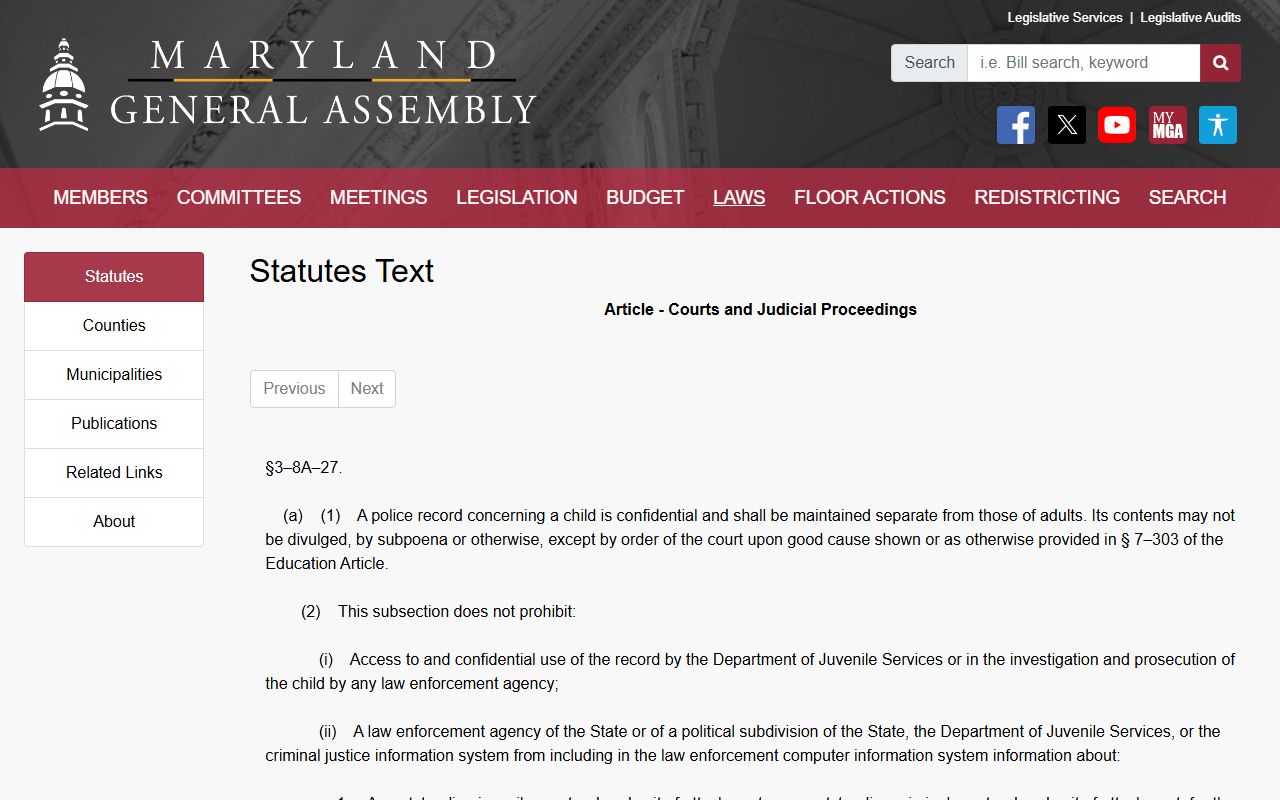
That confidentiality rule is why juvenile charges should not be treated as ordinary public adult court charge records.
Howard County Filing Decisions
The State's Attorney's Office is at 9250 Judicial Way, Suite 2200, Ellicott City, MD 21043. The research lists Main Office and Circuit Court phone 410-313-2108, District Court phone 410-313-3100, Victim/Witness Advocate 410-313-3153, fax 410-313-3294, and email sao@howardcountymd.gov. The elected State's Attorney is Rich H. Gibson, Jr.
Filing decisions can change the public charge record. The prosecutor may proceed on the original charge, file different counts, reduce a charge, dismiss a count, or enter nolle prosequi. The court record reflects the filed version and later status, so the first arrest allegation should not be read as the final legal outcome. The official court case, not a third-party arrest listing, is the source to check for current charge status.
Important: Public court or arrest lookup is not a consumer report and should not be used for FCRA-regulated decisions.